
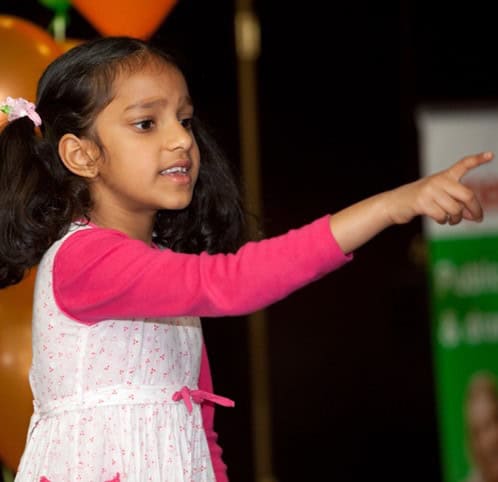
Have you ever noticed that some children walk into a room and seem instantly at ease?
They introduce themselves comfortably.
They volunteer in class.
They handle small mistakes without falling apart.
From the outside, it can look natural. In most cases, it is not.
It is practised.
Confidence Is Behaviour, Not Personality
Confident children consistently demonstrate specific behaviours. These are not personality traits. They are learned skills.
When you break confidence down into observable actions, it becomes teachable.
1. They Organise Their Thoughts Before Speaking
Confident communicators do not simply talk more. They structure their thinking.
Even a simple framework such as beginning, middle and end reduces mental overload and anxiety. When children know how to organise their ideas, speaking becomes manageable rather than overwhelming.
Structure creates calm.
2. They Project Clearly
Strong vocal delivery is rarely instinctive.
Breathing technique, posture and voice control all influence how a child sounds and feels when speaking. When children learn how to project clearly, they experience greater control over their delivery.
Control reduces nerves.
3. They Maintain Eye Contact
Eye contact signals connection and presence.
It also strengthens self assurance. Children who practise eye contact in safe, supportive environments find it far less intimidating in classrooms and social situations.
4. They Recover From Mistakes
Perhaps the most underestimated skill of all is recovery.
Confident children are not children who never make mistakes. They are children who know how to pause, reset and continue.
That resilience is built through repeated exposure to low pressure speaking opportunities where mistakes are normalised and managed constructively.
5. They Volunteer When Others Hesitate
Often, the difference between the child who volunteers and the one who stays silent is preparation.
When children have practised speaking in structured settings, raising their hand feels familiar rather than threatening. Familiarity reduces fear.
These Behaviours Can Be Trained
None of these habits require a dramatic personality shift.
They require structured practice.
At Super Speak, our programs for children aged 6 to 14 focus on layered skill development through:
- Weekly structured sessions
- Age specific curriculum
- Small group feedback
- Gradual increases in challenge
Over 20 years, and with more than 65,000 students taught, we have consistently observed the same pattern.
Children rise to the level of their training.
Not instantly.
Not identically.
But steadily.
Confidence Is Capability
It is important to separate confidence from loudness.
True confidence is capability.
It is knowing how to begin.
It is knowing how to continue when nervous.
It is knowing how to recover when something goes wrong.
When children build these skills early, they carry them into school presentations, leadership roles, interviews and eventually adulthood.
The children who appear confident are rarely fearless.
They are prepared.
And preparation can be taught.
If you want your child to develop the habits of a confident communicator, structured speaking practice makes a measurable difference over time.
Confidence is not something children either have or do not have.
It is something they build.
And when they build it properly, it stays with them.
Frequently Asked Questions
Q. Is confidence something children are born with?
A. Children are born with different temperaments, and some naturally feel more comfortable in social situations than others. However, communication confidence itself is largely behavioural. Skills such as organising thoughts, projecting clearly, maintaining eye contact and recovering from mistakes can all be taught and strengthened with practice.
Q. At what age should children start building public speaking skills?
A. Children can begin developing structured speaking skills from around age six. At this stage, they are highly receptive to learning frameworks, vocal control and presentation habits that become much harder to change later. Early exposure builds familiarity, which reduces fear.
Q. My child is shy. Will public speaking training make them louder?
A. The goal is not to change a child’s personality. Confidence is not about becoming louder or more extroverted. It is about capability. A quieter child can still become a clear, structured and self assured communicator. Training focuses on skill development, not personality change.
Q. How do confident kids handle mistakes differently?
A. Confident children are not mistake free. They have practised what to do when something goes wrong. Instead of freezing or shutting down, they pause, reset and continue. Recovery is a skill built through repeated low pressure speaking opportunities.
Q. Why does structure reduce anxiety when speaking?
A. When children know exactly how to begin, what to say next and how to finish, their cognitive load decreases. Uncertainty creates anxiety. Structure creates predictability. Predictability creates calm. Even a simple beginning, middle and end framework can dramatically improve delivery confidence.
Q. How long does it take to build speaking confidence?
A. Confidence develops gradually. Some children show noticeable improvement within months. For deeper behavioural change, consistent structured practice long term produces stronger and more lasting results. Like any skill, repetition matters.
Q. What is the difference between confidence and loudness?
A. Loudness is volume. Confidence is capability. A confident child knows how to start speaking, how to continue under pressure and how to recover if they lose their place. Volume alone does not create those abilities.
Q. Can structured speaking practice help at school?
A. Yes. Students who regularly practise structured speaking are more likely to volunteer in class, participate in discussions and approach presentations with less anxiety. These habits often extend beyond school into leadership roles and interviews later in life.
Q. What if my child refuses to speak in front of others?
A. Resistance is common, especially in children who fear embarrassment. Safe, supportive small group environments are critical. When exposure is gradual and guided, most children begin to build tolerance and then confidence over time. The key is progression, not pressure.
Q. Does practising public speaking really make a long term difference?
A. Yes. Children who build communication capability early tend to carry those skills into adolescence and adulthood. Confidence rooted in skill rather than personality becomes stable and transferable across academic, social and professional situations.